
Outstanding Warrants in Grant County
An active or outstanding warrant is a court order still sitting unserved, unrecalled, or uncleared. In Grant County, that order comes from Grant Circuit Court or one of the Grant Superior Courts, numbered 1, 2, and 3. Marion City Court and Gas City City Court run their own local dockets. The rules come from Indiana law. An arrest warrant directs the county sheriff to take the named person into custody and bring that person before the court without needless delay. Want to check your own record? The current Grant County Sheriff website offers no public active-warrant search, no downloadable roster, and no warrant-unit page, and the county courts post no full list either. So the practical route runs through the courts. Run your name through MyCase as a first pass, spot the court attached to any case, and then ask that court or its clerk to confirm the warrant's present status.
No Grant County Active-Warrant Roster
No official Grant County list means there is nothing to mirror, summarize, or count. It also means a third-party tally should never fill the gap. The county publishes no current total of open warrants. A claimed number without a dated official source would blur live court orders with old docket events, served warrants, and separate city-court matters. So build your own answer. Search Indiana MyCase by name. Call the Grant County Clerk about a county case, or contact Marion or Gas City City Court about its own docket. The sheriff's main office sits at 214 E. 4th Street in Marion, at 765-662-9836. Non-emergency dispatch is 765-668-8168. Neither number is a dedicated warrant line. State your purpose plainly and ask for the right unit. Note: Grant County posts no refresh schedule because it publishes no active-warrant list, and an empty search result never proves that no warrant exists.
The Grant County Active Warrant List
A conventional active-warrant list pulls together court orders that remain unserved or unresolved. Grant County simply has no public version. That leaves no local field layout, inclusion rule, or update cadence to describe. MyCase is not a substitute warrant list, either. It shows public case dockets and documents for participating Indiana courts, with limits on court coverage and older records. A docket may confirm that a judge issued a warrant yet offer no single active-status label. Later entries could record service or recall. Some events take time to show up. Read the whole sequence, then confirm it with the office that holds the record. A county case belongs to the Grant County Clerk and the named county court. A Marion or Gas City matter belongs to that city court.
Grant County MyCase Warrant Limits
The Indiana Judicial Branch describes MyCase as public case access, not a complete criminal-history or warrant-status search. So treat it as a starting point. Search by name, narrow the court and case status, and study the likely matches. Similar names demand care. A useful result gives you a case number and a court for follow-up. It does not replace a current answer from the court. The official public-access table explains which case and document classes appear online and which need another route. View the source for the MyCase access image.
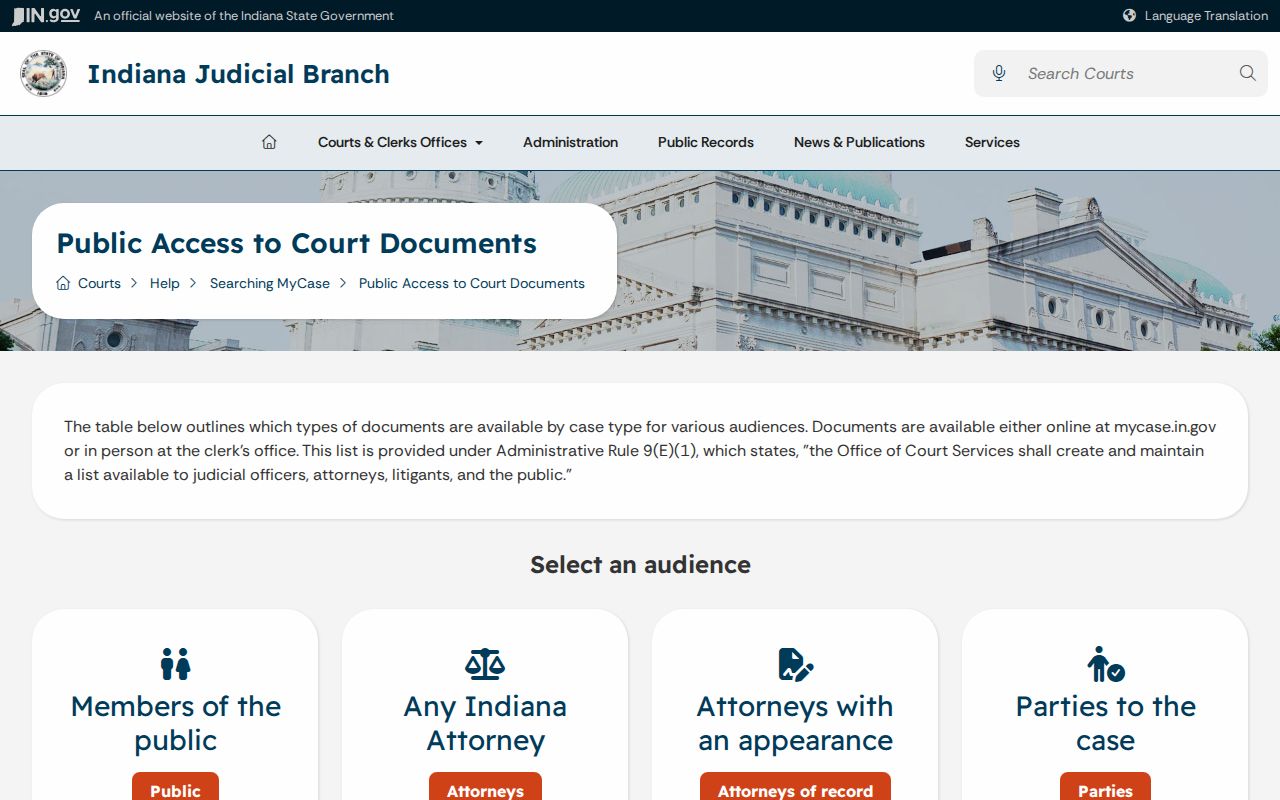
Grant County readers should note the table's lesson: sealed, juvenile, confidential, and excluded material is not an ordinary public docket.
Active Warrants: What They Show
Indiana Code 35-33-2-2 sets the official field base for a written arrest warrant. Grant County publishes no sample entry, so treat extra fields as confirmation points rather than an observed local database schema. Ask which court issued the order, the date, the alleged offense, and whether bail is stated.
| Name or description | Identifies the person the written command concerns. |
|---|---|
| Offense | States the nature of the alleged offense. |
| Issue details | Gives the county, date, and judge or clerk signature and title. |
| Court command | Directs arrest and prompt presentation before the court. |
| Bail | States an amount when the court includes one. |
| Later status | May require the court to confirm service, return, recall, or quashing. |
A future Grant County list might add a case or warrant number, court, charge class, holding agency, service date, and an "as of" date. Those are planning fields only. No local warrant-number format is public, so no sample code exists to cite.
Grant County Warrant Service Roles
The roles split cleanly. A judge issues or recalls the warrant. The Grant County Clerk keeps county court records and issues process under court authority. Sheriff patrol deputies serve arrest warrants and execute court paperwork. That division guards against a common error: the office that serves an order never gains the power to cancel it. The official Patrol Division page documents the service role, and the agency information there concerns the office rather than any personal warrant record. View the source for the patrol image.
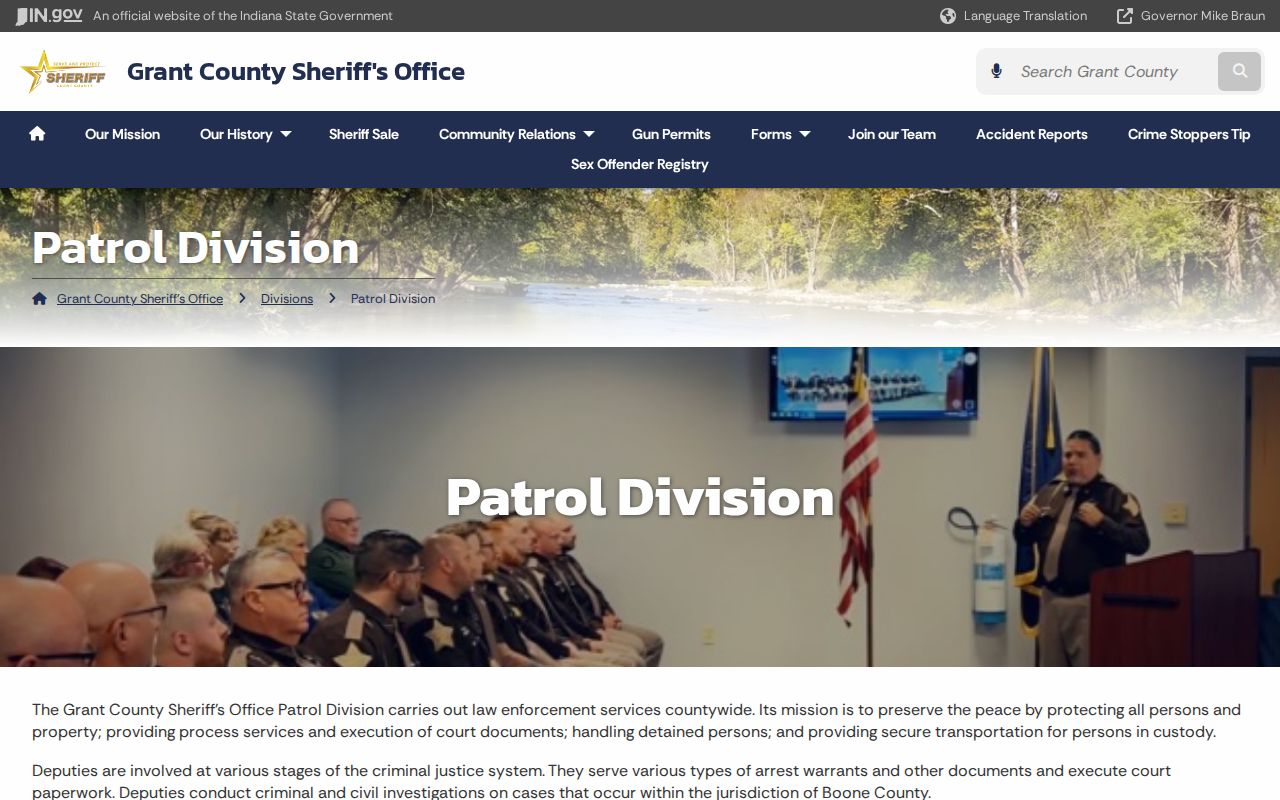
In Grant County, service puts a warrant into effect, and nothing more. Docket status and any recall stay with the issuing court.
Grant County Warrant Roundups
Grant County runs no public roundup, amnesty event, or most-wanted roster. Grant County Crime Stoppers does run an anonymous tip program, though it is no warrant list and no way to check personal status. It takes tips on felony crimes by phone or through P3tips.
Key Point: The Grant County Crime Stoppers program takes anonymous tips but publishes no active-warrant roster and cannot confirm or clear your warrant.
A most-wanted page, if Grant County posts one, shows a chosen few rather than every active warrant. It is not a full warrant list. Read it only on the official agency site, and let the county most-wanted reference explain how the program works and where its limits sit.
Restricted Grant County Active Warrants
Indiana's Access to Public Records Act opens most records to inspection and copying. Still, exceptions exist. Indiana Code 5-14-3-4 lets an agency withhold or redact confidential, investigatory, and court-excluded material, and separate court-record rules shield some documents too. A judge can also keep an unserved arrest or search warrant confidential by order. That is a narrow restriction. It falls well short of sealing every Grant County warrant forever.
- Unserved
- Law enforcement has not yet carried out the court command.
- Active or outstanding
- The order has not been cleared or recalled; Grant County publishes no local status-code set.
- Served
- The person was arrested or otherwise reached under the order.
- Recalled
- The issuing court withdrew the warrant.
- Quashed
- The court set aside or nullified the order.
Juvenile warrant records in Grant County are confidential as a rule. Sealed and expunged cases carry their own access limits. Send an APRA request to the office holding the record, but a lawful restriction may still block release.
Finding Your Own Name on the List
Grant County publishes no warrant list, so a likely warrant event turning up in MyCase is the best online starting point. Do not stop there. Save the case number, the court name, and the event date. Then call the Grant County Clerk at 765-668-8121 for a county-court docket, or reach the separate city court for a Marion or Gas City case. Ask whether the warrant is active, served, recalled, or quashed, and what the issuing judge requires next. Fixing the problem can mean a planned voluntary surrender, posting bond on the court's actual terms, or a motion asking the judge to recall or quash the warrant. A motion is simply a formal request filed with the court. Outcomes turn on the facts of each case. Grant County offers no universal walk-in or safe-surrender program. A lawyer can verify the order and coordinate with the right office.
Important: Consult a lawyer before surrender or payment; only the issuing court can state the steps that will resolve its active warrant.
Confirm a Hidden Grant County Warrant
When MyCase comes back empty, work the official chain instead of guessing. Check spelling first, then try name variants. Decide whether the matter might sit in Marion City Court or Gas City City Court. Ask that court's clerk to run its own docket search. If the question is about service, the Grant County sheriff's main office can point you to the right deputy. For a record an agency holds, file a focused APRA request that names the record you want.
- Search your own name in MyCase and record likely case details.
- Contact the exact county or city court shown by the docket.
- Ask the custodian for current warrant and recall status.
- Use the sheriff for service routing, not a court recall decision.
- Have counsel plan the appearance, bond, surrender, or motion.
This sequence covers separate Grant County courts, restricted records, and timing gaps in the data. It also strips away the false comfort of a blank search result. A live answer from the court beats any old copied list.